
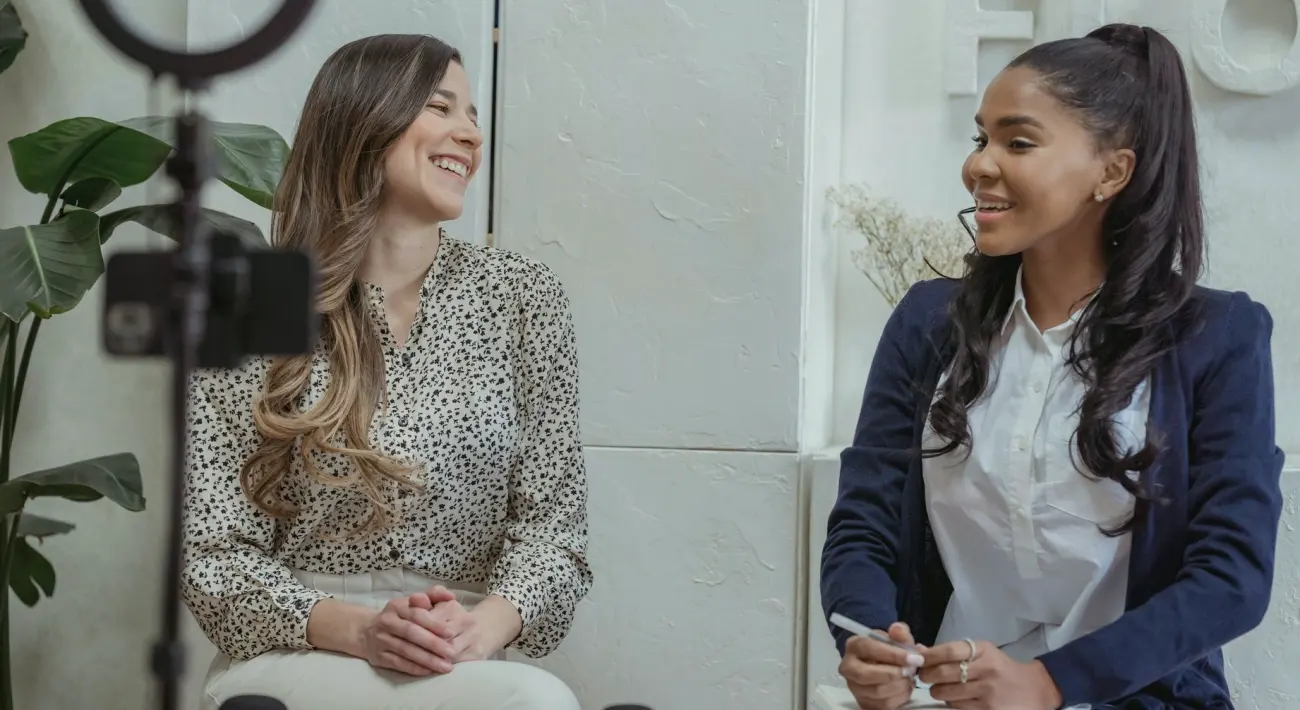
Start with what the interview is for
Before anything is booked, write down in one sentence what the recording must do for your programme. A guest who will be cut into a ninety-second package needs a different set-up from an expert who will talk for ten minutes uninterrupted. Editors on our side often receive footage shot without that decision, and it shows in the cutting room, where the framing leaves no space for graphics or the answers wander away from the story.
Say plainly where the material will run. A bulletin insert, a longer feature and a web clip each pull the shoot in a different direction, and it is far cheaper to decide that before the guest arrives than after. Mention any strand or format house style too, so the crew knows whether you want a tight head-and-shoulders shot or something looser with room around the subject.
- One sentence on the purpose of the interview
- Where the footage will run and in what length
- Any house style for framing or backgrounds
Know your guest before they arrive
The guest shapes the shoot more than most people expect. Someone who is used to cameras will settle in within a minute; a first-time contributor may need a quiet start, a glass of water and a few minutes of ordinary conversation while the lights are checked. Tell us what you know about their experience, and whether they will be reading from notes, since that changes where the eyeline and the lens should sit.
Practical details matter just as much. Let us know if the guest wears glasses, which can catch the lights, or has limited mobility and needs a particular seat. Patterned jackets and fine stripes can shimmer on screen, so a short note to the guest about plain clothing saves a retake. These small things rarely appear in a brief, yet they decide how relaxed the person looks on the day.
- Experience of the guest in front of a camera
- Glasses, seating needs or access requirements
- A short note to the guest about clothing
Lighting, background and framing choices
A lit studio interview should look deliberate without drawing attention to itself. Decide whether you want a neutral backdrop, a branded set or something that suggests the guest's own setting. A plain background keeps attention on the face and is easy to match to earlier recordings, which matters when several interviews for one story are cut together over a few days.
Agree the shot size and the angle of the guest to the lens. Looking slightly off camera towards the interviewer is the usual convention for news, while a direct-to-camera address suits a presenter or a statement piece. If your graphics team needs space for a name caption, tell us which side of the frame to keep clear. Settling this before the lights go up avoids reframing once the guest is already comfortable.
Sound is where recordings are won or lost
Viewers forgive a slightly soft picture long before they forgive poor audio. Ask how the voice will be captured: a lavalier clipped to the guest, a boom above the frame, or both as a safeguard. Discuss the room as well. Hard walls, a nearby corridor or an air handling unit can all intrude, and a short listen before recording usually finds the problem in a couple of minutes.
Tell us if the interviewer will be on camera or heard only off-screen, because that decides how many microphones are needed and how the questions are recorded. If a translator or second speaker will take part, say so in advance. Clean, separate audio tracks give the editor room to rebalance voices later, and that flexibility is cheap to arrange on the day and costly to replace afterwards.
- Lavalier, boom or both
- Noise in the room and nearby
- Number of voices to record
Clearances, timings and the running order of the session
Check that the guest has agreed to be filmed and understands where the footage may be used. If the interview touches on anything sensitive, your own editorial process should say who signs it off and whether the guest sees any of it first. We record to the brief we are given, so it helps to have those decisions made before the recording rather than during it.
Then look at the timing of the session itself. Allow time for the guest to arrive, for a sound and light check, and for a short rehearsal question. A thirty-minute interview rarely fits into thirty minutes of studio time. If you also want stills or a portrait for web use, ask for it to be planned into the slot, since it is easier to capture while the lighting is already set.
- Consent and intended use agreed with the guest
- Time for arrival, checks and a rehearsal question
- Portrait or stills planned into the same session
Format, naming and who receives the files
The last part of the checklist concerns what happens after the guest leaves. State the delivery format your newsroom needs, the frame rate, and whether you want the full recording or a trimmed selection. Tell us how files should be named so they land correctly in your ingest, and who should receive the link or drive.
If a turnaround matters, say when you need the material and whether it is a raw copy or a finished cut. As an editor, I would rather know at the start that a clip is needed by the evening bulletin than discover it halfway through. A clear hand-over note, listing the guest, the topic and anything the editor should avoid, keeps the material moving without a string of follow-up calls.
None of these points is difficult on its own, but together they decide whether a studio interview comes back ready to use or needs repair. Work through them with your producer before you book, and bring the answers to the first conversation with us. If a point is still open, say so, and we will help you settle it while there is still time to plan the shoot around it.