
The call from Morag's desk
Morag runs the afternoon bulletin at a regional television newsroom, and she rang us on a grey Tuesday in the middle of autumn. A landslip had closed a minor road north of Stirling, and her reporter, Euan, needed to go live from the nearest safe spot before the evening programme. The studio had no outside broadcast van free, and the story would not wait for one.
She was direct about what she needed. A picture that would not break up, sound that could be understood over wind, and a crew who would not need hand-holding. She also wanted to know, before anything else, who would be standing next to Euan and what they would be carrying.
Duncan took the details, confirmed a quotation in writing and sent a crew within the hour. That is the usual order of things here: a clear brief first, then the kit, then the drive. It sounds dull, and that is the point, because dull is what a live link should feel like from the studio side.
What we packed for open ground
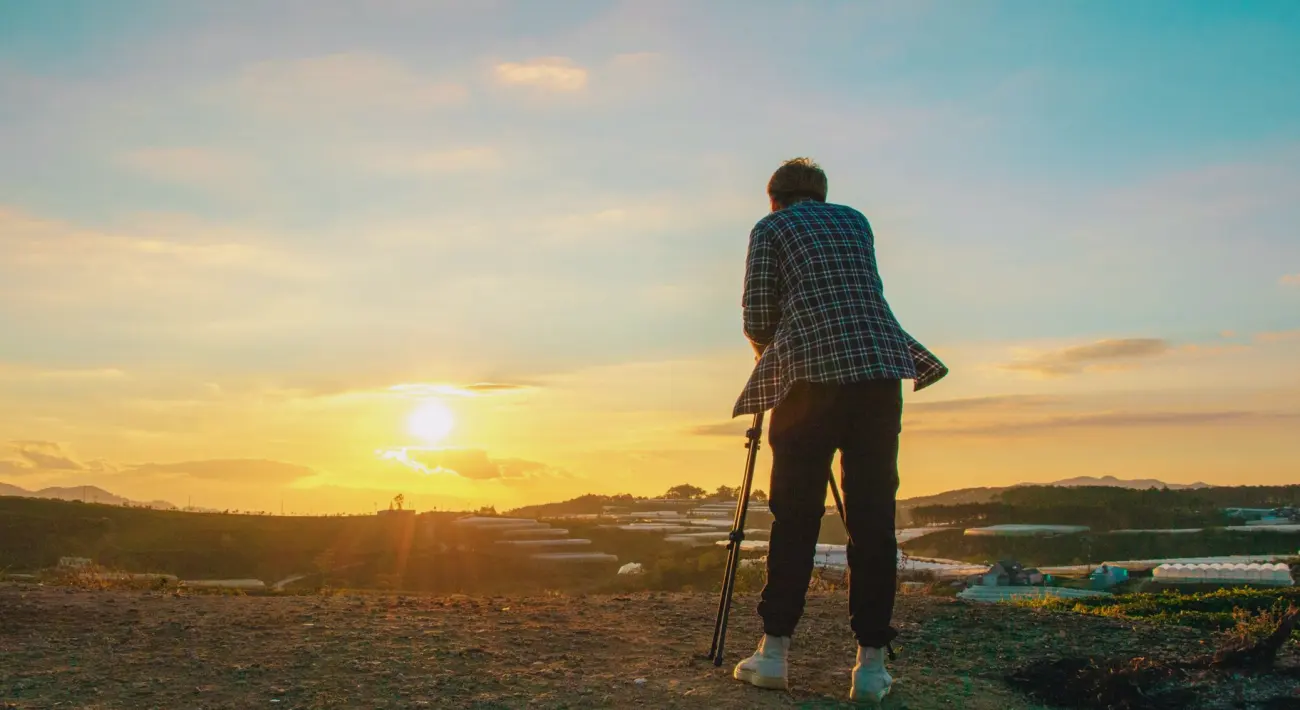
Live Link and Remote Reporting means portable live-feed kit and a trained crew, and for this job that meant a camera on a sturdy tripod, a reporter's microphone with a spare, a small monitor, and a bonded connection with a second route in case the first faltered. Callum chose a position at the edge of a lay-by, side-on to the slip, so the viewer could see the scale of the damage without the crew standing anywhere near it.
We carried more than we expected to use. Wet-weather covers for the camera, weighted bags for the tripod legs, spare batteries kept warm inside a jacket, and a printed card with the studio's return-feed contact. None of it is clever. All of it has saved a transmission at some point.
Distance mattered too. The site sat a short walk from the car, so we split the load between two people and left the heavier case with the vehicle, rigging only what the shot needed.
- Camera, tripod and weighted bags for gusty ground
- Primary and backup connection routes
- Spare microphone and warm batteries
- Return feed so Euan could hear the presenter
Testing the link before the bulletin
We arrived with roughly ninety minutes in hand and spent the first thirty on checks rather than on pictures. Priya, working from the editing suite in Stirling, watched the incoming feed and told us what she saw: a slight softness in the background, a flicker when a lorry passed, and a short delay in the return audio. Each of those was fixable on site, but only because we had found them early.
Callum nudged the camera angle to cut the glare off the wet tarmac. We moved the antenna a few metres higher up the bank, which steadied the connection noticeably. Euan rehearsed his opening lines twice while the studio confirmed it could hear him cleanly.
This rehearsal is the part clients rarely see and the part we protect most. A live shot that begins with an apology costs the newsroom more than a test that begins an hour sooner.
Going live in rain and wind
The weather turned as the programme began. A steady drizzle blew sideways across the lay-by, and the wind pulled at Euan's coat. The microphone's windshield did most of the work, and Callum framed a little tighter than planned so water on the lens stayed out of the corners of the shot.
Euan filed twice, a two-way with the presenter and a short update ten minutes later. The link held on both. At one point the primary connection dipped, and the backup took over so smoothly that the studio only noticed from the readout on their side. Nobody watching at home would have known.
Morag told Duncan afterwards that the gallery had stopped worrying about the picture within the first minute and gone back to worrying about the story. For a crew like ours, that is about the best review a transmission can earn.
What we changed afterwards
Every job leaves a short note behind, and this one produced three. First, we now carry an extra tripod weight bag as standard, because gusts nearly caught us out. Second, we agree the return-feed contact in writing before leaving Stirling, so nobody is hunting for a number on a hillside. Third, we ask the newsroom whether the reporter prefers an earpiece or a small speaker, since Euan found the earpiece far easier in the wind.
None of these are dramatic changes. They are the small adjustments that accumulate across a year of remote work and make the next shoot a little calmer than the last.
We also sent Morag a clip of the unedited feed so her team could check the picture against their own broadcast specification. She did, found nothing to flag, and booked us again for a council story the following week.
What a newsroom can take from this
If you are thinking about live reporting from outside the studio, the most useful thing you can give a crew is early notice and a clear idea of the shot. Tell us where the reporter will stand, how long the live slot runs, and who on your side will be monitoring the feed. With those three answers, most of the planning is already done.
Be realistic about location too. Open ground, tall buildings and remote glens each pose different problems for a connection, and a short conversation beforehand tells us which kit to bring and whether a second route is worth carrying. We would rather say so plainly than discover it at the start of your bulletin.
Pricing for live work depends on crew size, kit and travel, and Duncan will set it out in a written quotation before anything is confirmed.
Morag's story was an ordinary one, which is exactly why it is worth telling. A reporter stood in poor weather, a link stayed steady, and a newsroom got on with the news. That quiet outcome comes from checks done early, kit chosen for the ground and a crew who know their jobs. If you have a reporter heading outside the studio, call us on 01786 450318 and we will talk it through.