
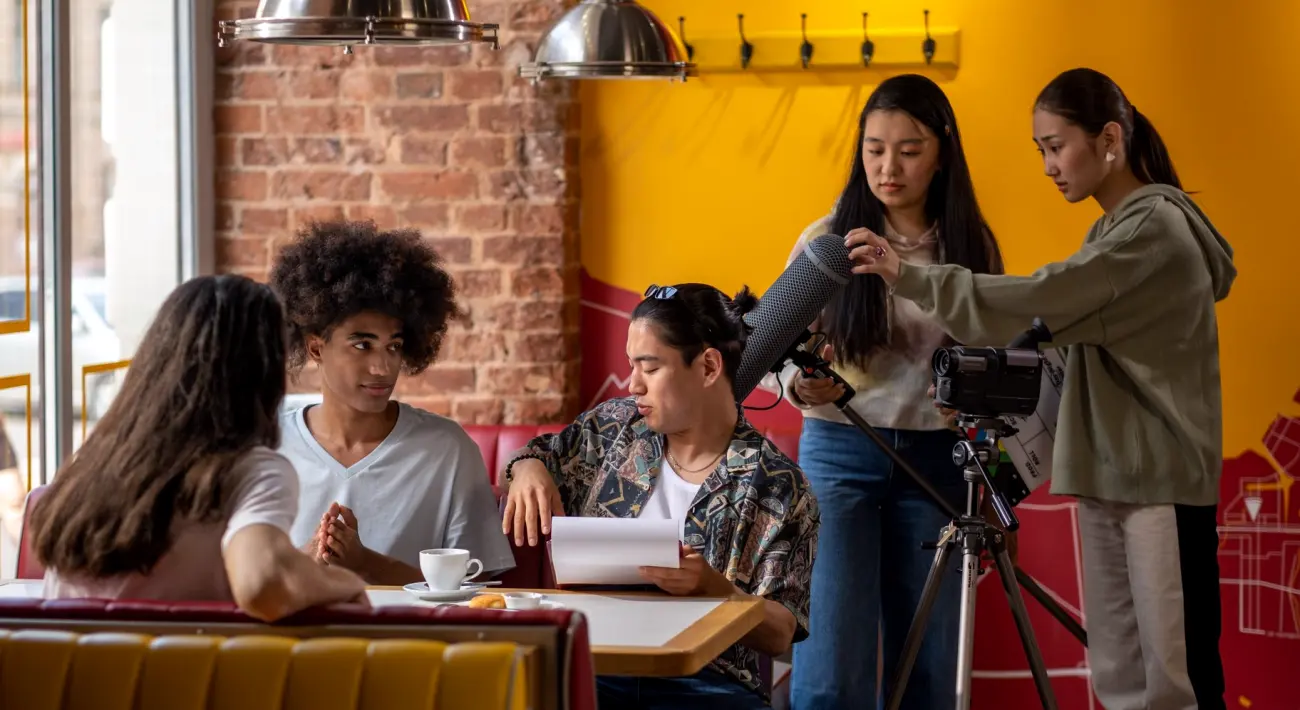
It starts before the edit does
People tend to picture the edit as the moment when speed is won or lost. From where I stand with a camera, it is decided much earlier. By the time I hand a card to Priya, the shoot has already told her how the next hour will go: whether the interview was recorded with clean sound, whether the cutaways cover the points the reporter will make, whether the clips are named in a way anyone can follow.
When I am on a breaking story I think about the edit as I film. I hold a shot for a few seconds longer than feels natural, because an editor cannot lengthen a shot that was cut short. I record a wide, a medium and a close detail of the same scene so there is something to cut to. None of that slows me down on location, and it saves a good deal of searching later.
What arrives in the suite
Footage reaches the edit in one of two ways. If the crew is nearby, the cards come back by hand and are copied to two drives before anything is opened. If we are further afield, files are sent over a mobile connection in smaller batches, so editing can begin on the first clips while the rest are still on their way.
Priya checks each batch before cutting. She plays through the clips at speed, looking for focus problems, clipped audio and any shot that ought not to go to air. She makes a short log of the best interview answers and the strongest pictures, with timecodes. That log is the map for the whole edit, and it is why a package can be assembled in a fraction of the time the raw footage would suggest.
Shaping the package
The brief from the newsroom comes first: a running time, a style, and whether a reporter's voice track is already recorded or will be added later. Priya builds the story around the strongest piece of interview, then covers it with pictures that match what is being said rather than whatever looks best. A mismatch between words and images is the quickest way to make a viewer doubt a report.
Names, titles and place captions are checked against the notes taken on location, not copied from memory. If a spelling is uncertain, someone phones the contact rather than guessing. It takes a minute and it avoids a correction. Pace is the last thing she adjusts: the cut should feel steady, with room for a moment of natural sound where the scene deserves it.
Checks before anything is sent
A finished package is not delivered the moment the last cut is made. It is played through from start to finish on a monitor, with headphones on, by someone who did not cut it. They are listening for audio levels that jump, a black frame at the join between clips, a caption that overlaps the edge of the picture, and any shot that should not be there.
Only then is it exported. The checks sound dull, and they are, but they are the difference between a package a producer can drop straight into a running order and one that has to be sent back. Newsrooms rarely have time for a second round, so we treat the first delivery as the only one.
- Levels sit within the broadcast loudness range
- No black frames or flash frames at the joins
- Captions and names match the shoot notes
- Running time matches the brief
Delivering in the format you asked for
Every newsroom has its own preference for file type, frame rate, resolution and naming. We ask for these at the start of an engagement and keep them on record, so Priya is not working them out in a hurry on the day. If a newsroom changes its specification, we update the record and confirm it in writing.
Delivery is by whichever route the newsroom uses, whether a secure transfer link or a drop to its own ingest folder. Each file carries a name that follows the agreed pattern, with the story slug, the date and a version number. Duncan confirms receipt with the duty producer, so nobody is left wondering whether a package arrived or is still on its way.
What helps us most from your side
The most useful thing a producer can give us is a clear brief at the start: how long the piece should run, who the audience is, and what the story must say in its first ten seconds. The second is one named contact who can answer questions quickly while the edit is under way.
If a reporter has already written a script, send it before the footage arrives. Priya can then begin placing pictures against the words and is not waiting for the voice track. These are small things, but over a busy afternoon they decide whether a package is ready ahead of the bulletin or just after it.
The speed of a good edit is mostly preparation. Careful filming, honest logging, a firm brief and a final check by a second pair of ears do more than any shortcut. If you would like to talk through how your newsroom receives footage, get in touch and we will go through the formats and timings with you.