
Why studio interviews go wrong early
When I look back over the studio sessions we have recorded since 2014, the problems that cost the most time were rarely technical failures. They were decisions left until the guest was already in the chair. A newsroom books a slot, a guest arrives nervous, and everyone assumes the lights, the sound and the questions will sort themselves out on the day.
They do not. A lit interview is a small production with its own order of work: the space is prepared, the guest is settled, the levels are checked, and only then does anyone ask a question. When that order is skipped, the edit pays for it later, often under deadline pressure with a bulletin waiting.
This piece goes through the mistakes I see most often in studio interviews and portrait shoots for guests, experts and presenters, and what we do to avoid each one. None of it needs special equipment. It needs a little discipline before the red light goes on.
Mistake one: lighting the room instead of the face
The most common error is treating studio light as a general brightness setting. A room can be well lit and still make a guest look tired, flat or oddly shadowed under the eyes. Broadcast lighting is about shaping the face, not filling the space, and that takes a key light, a softer fill and some separation from the background.
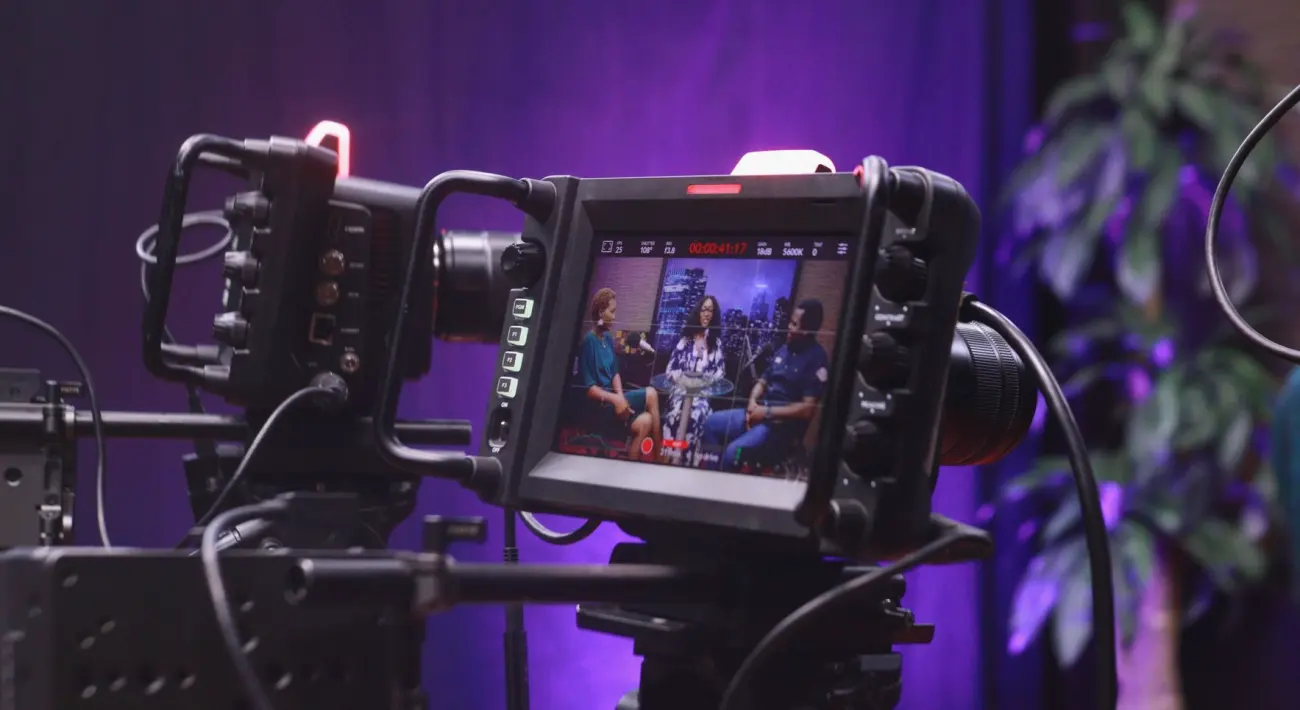
We position the key light first, slightly above eye level and to one side, then bring in the fill until the shadow side holds detail without going flat. A gentle back light stops the guest merging into the wall behind them.
Glasses need particular care, because a light placed too low or too square throws reflections straight into the lens. Moving the light a few inches higher and wider usually solves it. We check this on the monitor with the guest seated, never on a stand-in, since posture changes how the light falls.
- Set the key light before anything else
- Check glasses for reflections with the guest seated
- Keep a visible gap between guest and background
Mistake two: trusting your ears and ignoring the sound
A studio looks quiet to the eye and sounds very different through headphones. Air conditioning, a hum from a lighting unit, traffic through a thin window and the buzz of a phone left in a pocket all arrive on the recording and cannot be removed cleanly afterwards.
Before every interview our sound recordist listens to the room for a full minute with nothing happening, then asks the guest to speak at normal volume and again as they would when making a point. Those two levels set the safe range. Many guests drop their voice when they think carefully, and that quiet answer is often the best line of the interview.
We also ask guests to switch off phones rather than silence them, and to remove jewellery that taps on a table. These are small requests, made politely and early, and they save a surprising number of retakes.
- Listen to the empty room before any recording
- Test both a normal and an emphatic speaking level
- Ask for phones switched off, not just silenced
Mistake three: leaving the guest unprepared
A guest who walks in cold will spend the first five minutes working out where to look and whether they are allowed to pause. That nervousness shows, and a producer then tries to correct it mid-recording, which makes it worse.
We speak to the guest before they reach the chair. We explain who will be on the other side of the lens, whether they should look at the interviewer or the camera, and that a pause or a restarted sentence is perfectly acceptable. We tell them roughly how long the session will take and what the first question will be, so the opening is not a surprise.
Experts are often more anxious than they let on, because they worry about saying something imprecise. A calm word about accuracy, and the offer to repeat any answer, relaxes them far more quickly than reassurance about the equipment ever does.
Mistake four: framing without thinking about the edit
Framing a portrait or interview is not only about how the shot looks live. It decides what an editor can do afterwards. A guest placed too centrally with no look room leaves little flexibility when the shot is cropped for a different aspect ratio or a graphic is added beside them.
We frame with the lower third and any likely graphics in mind, leave a sensible amount of headroom, and keep the guest's eyeline consistent from the first answer to the last. If we are recording two angles, we agree the match before the interview begins, so the cut between them feels natural.
We also record a few seconds of room tone and a clean shot of the guest listening. Editors reach for these cutaways constantly, and having them from the same session, under the same light, avoids awkward jumps in the finished package.
- Leave headroom and look room for graphics
- Hold the eyeline steady across the session
- Record room tone and a listening shot
Mistake five: no check before the guest leaves
The last mistake is also the cheapest to fix. Once a guest has left, a fault in the recording cannot be repaired by asking again. Yet many sessions end with a handshake and no review at all.
Before anyone stands up, we play back a short section of the first answer, a middle one and the last. We check that the picture is sharp, the sound is clear and the levels held steady throughout. We confirm names, job titles and spellings with the guest directly, since a caption error is far more embarrassing than a retake.
Then we log the files with agreed names and confirm the delivery format with the newsroom. Ten minutes of checking at the end has saved us from re-booking a guest more than once, and it keeps the footage ready to move quickly into the edit.
Good studio interviews depend less on the equipment than on the order in which the work is done: light the face, hear the room, prepare the guest, frame with the edit in mind and check before anyone leaves. Each step is small, and together they keep a recording usable and broadcast ready. If you would like to talk through a studio session for your newsroom, the contact page is the place to start.