
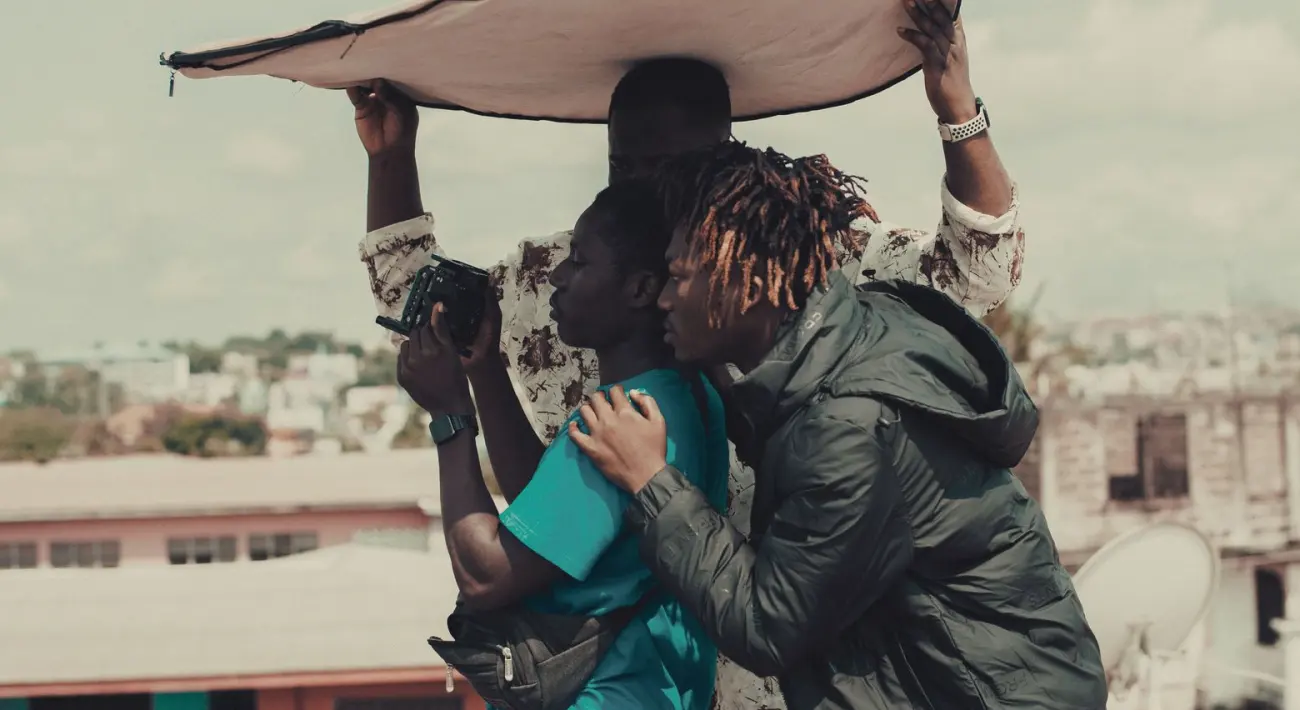
Two people, one vehicle, one brief
A breaking news crew from dupyra is a camera operator and a sound recordist, travelling together in one vehicle. That small size is deliberate. Two people can reach a scene quickly, park near it, and move around a cordon or a crowd without drawing attention or blocking the road. A larger team would need more coordination before anyone filmed a frame.
Before leaving Stirling, the crew confirms the brief with the newsroom: what the story is, which bulletin it feeds, how long a package is expected to run and which delivery format is wanted. That call takes a few minutes and saves far more time later, because the crew knows what to look for rather than shooting everything and leaving the choosing to the edit.
I work on the other end of this chain as a video editor, so I see the result of those decisions every day. A clear brief at the start is the single biggest reason footage arrives usable.
Cameras chosen for speed, not for show
For news work we use a shoulder-mounted or compact broadcast camera that can be switched on and shooting within seconds. The attraction is not image tricks but reliability: dependable autofocus when it is needed, manual control when it is not, and a recording format that a newsroom's ingest system accepts without conversion.
Callum, our lead camera operator, sets white balance, exposure and frame rate before reaching the scene whenever the light allows. Autumn is awkward for this. Low sun, sudden rain and early dusk mean the light can change during a single interview, so he checks the monitor every few minutes rather than trusting an earlier setting.
A tripod goes with every crew, even when the plan is handheld. Steady wide shots and held interviews are what editors reach for first, and a shaky establishing shot is rarely rescued in the cut.
- Broadcast-ready recording format agreed before the shoot
- Fast-start camera with manual override
- Tripod carried on every job
- Spare batteries and cards in the bag
Sound is half the story
A recordist is not a luxury on a news shoot. Picture can be patched with cutaways, but poor speech is very hard to repair. The recordist watches levels, listens through headphones and tells the operator when wind, traffic or a generator is spoiling a take, so the problem is fixed on the spot.
The usual kit is a directional microphone on a boom or a pole, a handheld microphone for reporters and radio lapel microphones for seated guests. Wind protection is standard in every season, since a gusty roadside will ruin a clean line in seconds.
Ambient sound is recorded as well. A minute of the scene with nobody speaking gives the editor something to lay under pictures, and it makes the finished package feel like a place rather than a collection of clips.
Shooting with the edit already in mind
Good field habits are really editing habits. The crew shoots in sequences: a wide shot to set the place, a medium shot of the action, a close detail, then a cutaway. Holding each shot for a count of ten gives the cutter room to trim without running out of picture.
Interviews are framed with a little space either side of the speaker, and the crew records a few seconds of silence before and after each answer. Those small pauses are what let an editor trim a clean in-point instead of starting mid-breath.
Callum also notes the names, titles and spellings of anyone filmed, and passes them on with the footage. When Priya's desk checks a package against the broadcast specification, a wrong caption is the kind of error that costs the most time to find later.
- Wide, medium, close and cutaway for every location
- Ten-second holds on each shot
- Names and spellings written down on the spot
Moving the material back to the newsroom
Footage is only useful once it arrives. Cards are labelled and backed up as soon as a shoot finishes, and files are named using the convention the newsroom prefers, so they land in the right place without anyone renaming them by hand.
Where the story is urgent, the crew sends selected clips from the field over a mobile connection while the full recording continues. The newsroom can start planning the bulletin around material it has already seen, and the complete files follow once the crew is back at base or on a reliable line.
Not every location has a decent signal in the hills or on the coast, so the crew tells the newsroom early if there will be a delay, rather than leaving a producer waiting on a file that is not coming.
What we do when a plan falls apart
Breaking stories rarely go to plan. Roads close, a press conference is moved, a witness leaves before the crew arrives. The crew keeps a short list of fallback shots for most situations: the wider setting, the emergency vehicles, the faces in the crowd, the signs and landmarks that identify the place.
Safety comes before the shot. The crew stays behind any cordon, keeps away from live traffic and leaves if the situation turns unsafe, however good the picture might be. A calm, accurate package from a safe distance is worth more to a bulletin than a dramatic clip taken at risk.
Whatever happens, the newsroom hears from us. A short message saying what was filmed, what was missed and what is on its way keeps the producer informed and the schedule honest.
- Fallback shots kept in mind for every scene
- Safe distance and cordons respected
- A plain update to the newsroom whatever the outcome
None of this equipment is unusual, and that is the point. A small crew, dependable cameras, careful sound and shooting habits built around the cut are what get usable footage to a bulletin on time. If your newsroom wants to talk through how a crew would work on your type of story, the contact page is the place to start.