
The call from Anna
Anna phoned us in the early part of the autumn. She produces the evening bulletin for a small regional desk, and most of her reporters had started as writers, not camera people. Budgets had shifted, and more of them were being sent out alone with a lightweight camera and a clip-on microphone. Her problem was plain: the stories were good, but the pictures arriving in the edit were uneven, and the sound was the worst of it.
She did not want a long course. She wanted something her team could fit around the bulletin schedule, with people who had filmed under pressure. I took the call with Duncan, who handles our scheduling, and we agreed on two short sessions a week apart, so the reporters would have time to try things on real assignments in between.
What we found when we watched her footage
Before planning anything, I asked Anna to send a handful of recent clips. Nothing was disastrous, which is usual. The recurring faults were small and easy to name: interviewees placed squarely against a bright window, wide shots held for too short a time to be cut, and wind noise on almost every outdoor piece. One reporter had framed every guest dead centre with a lot of empty space above the head.
None of this came from carelessness. These were people thinking about the story while operating a camera with half their attention. That shaped the training. We chose to fix a few habits properly rather than cover everything, because habits are what survive a fast-moving afternoon when a call comes in and the van is leaving in ten minutes.
- Guests lit from behind by windows
- Wide shots too short to edit
- Wind noise on outdoor sound
- Headroom and framing inconsistent
The first session: framing and light
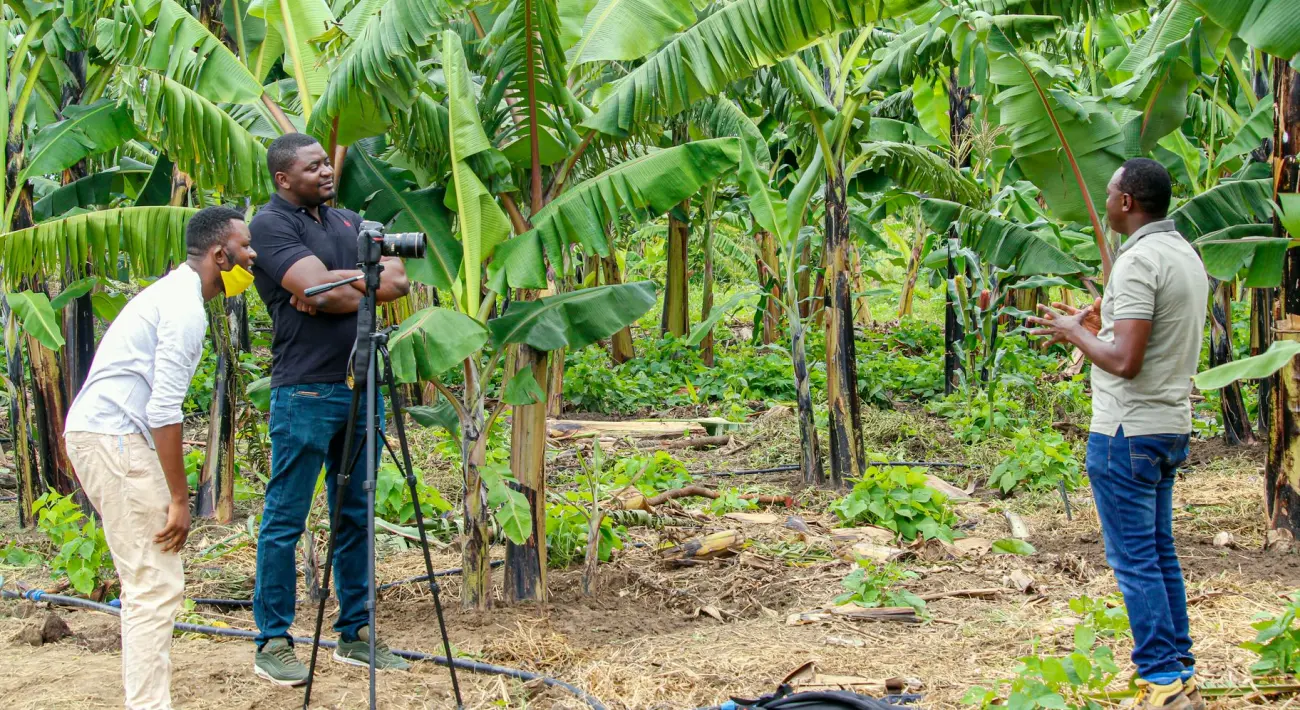
We held the first session in the newsroom car park and the corridor beside it, because that is where her reporters actually work. I started with framing, using the reporters' own clips on a laptop. We looked at where a guest sits in the frame, how much room to leave for a lower-third caption, and why a steady wide shot, held for a slow count of ten, gives the editor something to work with.
Then light. I had each reporter place a colleague near a window, see the problem for themselves, and fix it by turning the guest to face the light or moving ten steps along the pavement. No extra equipment was needed. The point was to look at the light before pressing record, which takes about five seconds once it becomes routine.
The second session: sound and moving quickly
A week later we returned for sound, which is where most unusable footage is lost. We covered where to place a clip-on microphone, how to check levels by wearing headphones rather than trusting the meter, and how to shield a handheld microphone from wind with a simple body position. Each reporter recorded a short piece to camera on a breezy street and listened back immediately.
The second half of the day was speed. I set a scenario: a road closure, one reporter, twenty minutes. They had to choose a position, frame an establishing shot, record a short interview and capture a few cutaways. We reviewed each attempt together, and the reporters were quick to point out their own slips, which is the best sign a session is landing.
- Headphones on for every recording
- Record ten seconds of room tone
- Cutaways: hands, signs, passing traffic
What Anna's desk does differently now
Anna told us a few weeks later that the change was most visible in the edit. Her editor no longer asks for a reshoot because a guest is a silhouette, and outdoor interviews now arrive with usable sound. The reporters have also started recording a few cutaways without being asked, so the finished packages have more to cut to.
She also mentioned something we had not planned for: the reporters talk about shots more easily with each other. Words like headroom and room tone have become part of the daily conversation on the desk. That is a modest result, and a lasting one, because it means the habits are being passed on inside the team rather than depending on us.
Anna's case is typical of the training we do: two short sessions, built around footage her reporters had already shot, aimed at a few habits rather than a full syllabus. Nobody became a specialist camera operator, and nobody needed to. They became reporters who check the light, listen to their sound and hold a shot long enough to cut. If your desk has a similar gap, we are happy to talk it through.