
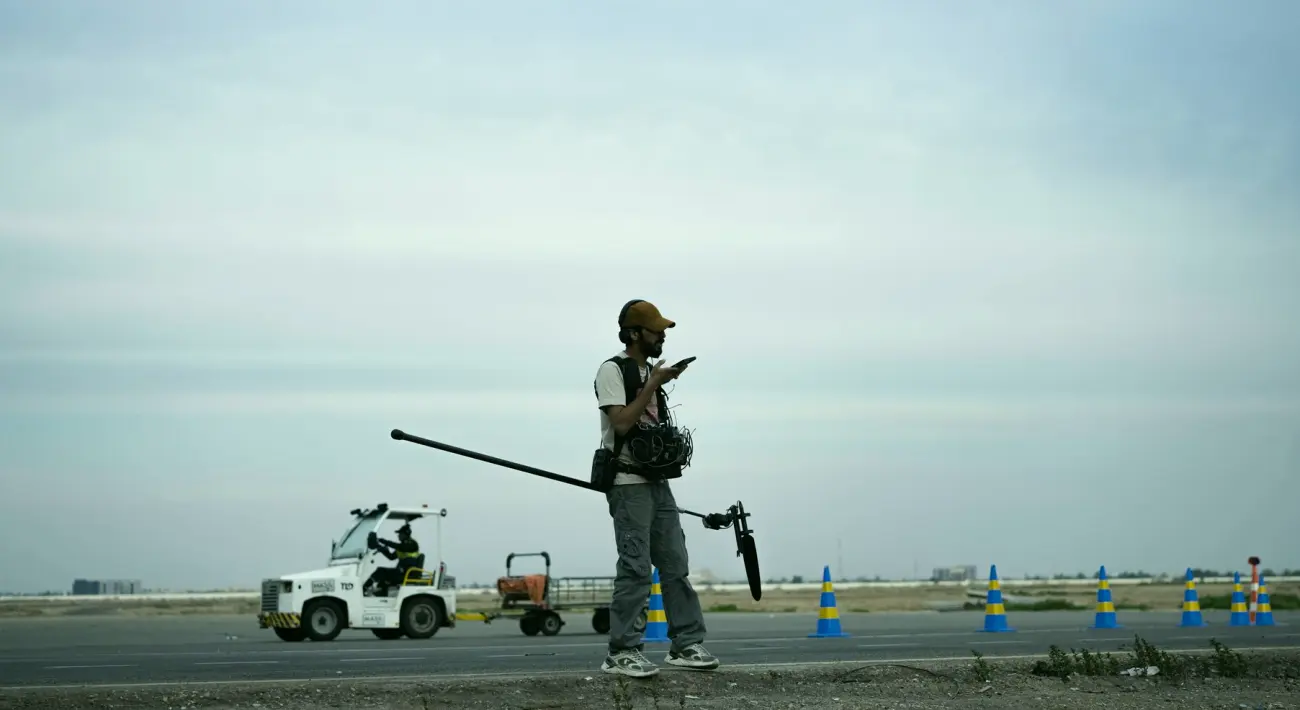
Why live reporting from outside the studio needs its own crew
A reporter standing in a car park, on a harbour wall or outside a council building is asking a lot of the equipment around them. The picture has to hold steady, the voice has to be clear over wind and traffic, and the signal has to reach your gallery without breaking up. None of that happens by accident, and it rarely works when a single person is left to manage the camera, the sound and the link as well as the story.
That is the reasoning behind our Live Link and Remote Reporting service. It pairs portable live-feed kit with a trained crew, so that the reporter can concentrate on what is being said while someone else watches the frame, the levels and the connection.
I set this service up after years in newsrooms where the live shot was the part everyone worried about most. The worry was usually not the reporter. It was the dozen small things around them that nobody had time to check.
We work from Stirling and travel across Scotland and the north of England, so most of the locations you are likely to need are within a sensible journey of us.
What the portable kit and crew actually include
The kit is built to be carried, set up and running in a short time, because live stories seldom wait. It covers a camera on a tripod, a microphone suited to speech outdoors, monitoring so the crew can see and hear what your gallery receives, and the portable live-feed equipment that sends the picture back to you.
The crew is trained to run all of it together. One person looks after the picture and framing, the other after sound and the feed itself, and both know the order of a live hit: check, rehearse, go, then hold position until you tell us to stand down.
We agree the details beforehand with your producer, including the format you need and who we speak to on the day. That conversation is usually short, but it saves a great deal of confusion once the clock is running.
What we do not do is write or direct your report. The reporter and your editor own the content; we own the quality of what travels down the line.
- Camera, tripod and speech microphone set up at the location
- Live-feed kit that sends the picture back to your gallery
- Crew monitoring picture, sound and connection throughout
- A named contact on our side for your producer to call
How a live booking goes from enquiry to broadcast
Most bookings begin with a call or a message through our contact page. Duncan Fraser, who handles scheduling and quotations, asks where the reporter will be, roughly when the live slot falls, how long it runs and what your gallery expects to receive. From that he can tell you whether we can cover it and who would be going.
You then receive a written quotation or confirmation. Once it is agreed, the crew is assigned, and we send you the location details and the call times we have noted so everyone is working from the same page.
On the day, the crew arrives ahead of the slot to choose a position, test the link and check sound against the surroundings. A short rehearsal with your gallery follows, if you want one, so that the first real minute of the broadcast is not also the first time anyone has tried the connection.
Afterwards we are available for a quick debrief, and anything that needs to be fixed next time is noted down rather than remembered vaguely.
Choosing a position: the part viewers never notice
Much of a good live shot is decided in the first few minutes on site. The crew looks for a spot where the background supports the story without distracting from it, where the light will not change badly before the slot, and where the feed has a reasonable chance of staying steady.
In mid autumn that judgement carries extra weight. Daylight fades earlier, so a position that looks fine at three in the afternoon can be dim and flat by the evening bulletin. Rain and wind are more likely, and both affect the microphone as much as the camera.
We therefore plan around the time of the live slot rather than the time of arrival. If the hit is in the dark, we think about how the reporter will be lit and where. If it is blustery, we think about shelter for the microphone and where the reporter can stand without being buffeted.
These are small decisions, but together they are the difference between a shot that looks calm and one that looks improvised.
- Check light for the time of the slot, not the time of arrival
- Protect the microphone from wind and passing traffic
- Keep the background relevant but not busy
- Leave room in the frame for graphics your gallery may add
What your newsroom can do to help the crew
A little preparation on your side makes the live link smoother. Tell us the exact format and delivery route your gallery expects, the name of the person who will cue the reporter, and a phone number that will be answered during the broadcast. If there is a backup plan, such as returning to the studio or running a recorded package, we want to know it.
It also helps to share the likely length of the slot and whether it may be extended. Crews plan battery, positioning and staffing around the expected duration, and a slot that quietly doubles is easier to handle when we have been warned it might.
Please let us know about anything at the location that could affect the shoot, such as restricted areas, permissions you have already arranged or sensitive subjects nearby. We will not guess at these on site.
Finally, if your reporter has particular preferences, such as the side they like to stand on or whether they use an earpiece, tell us in advance. It takes a minute and saves setting up twice.
Where this service sits alongside our other work
Live Link and Remote Reporting is one of several services we offer, and it often works alongside the others. A crew that films a breaking story can also cover the live hit from the same location, and footage shot around the broadcast can pass to our editors for a quick package once the live slot is over.
For newsrooms that go live from outside the studio regularly, we can also help set up the routines around it, such as how files are named and handed over afterwards, so that the recorded material reaches your editors without confusion.
The aim is the same across all of it: accurate pictures, clear sound and a reliable hand-over, delivered at the speed a bulletin needs.
If you are planning a live broadcast from outside the studio, the sensible first step is a short conversation about the location, the timing and the format you need.
Live reporting from outside the studio goes best when the people around the reporter have done this before and have been told what the gallery expects. Our portable kit and trained crew are there to carry that load, so the reporter can talk about the story. If you have a live slot coming up, get in touch through the contact page with the location, the timing and your preferred format, and we will tell you plainly whether we can cover it.